
The state is known as the state of the rising sun. It is the place where the sun first encounters the Indian land and lights it. Arunachal means the mountain where the warming sun rises. Also, there are very devotional mountains where it is believed that Shiva performs meditation.
Yes, the state has its own identity in terms of landmarks, but its heritage is another interesting thing to know about. Here, we will discuss how the people of the state are deeply ingrained with its history and heritage.
The state’s heritage is alive through intricate craftsmanship, weaving, distinct bamboo crafts, and festivals like Solung or Losar.
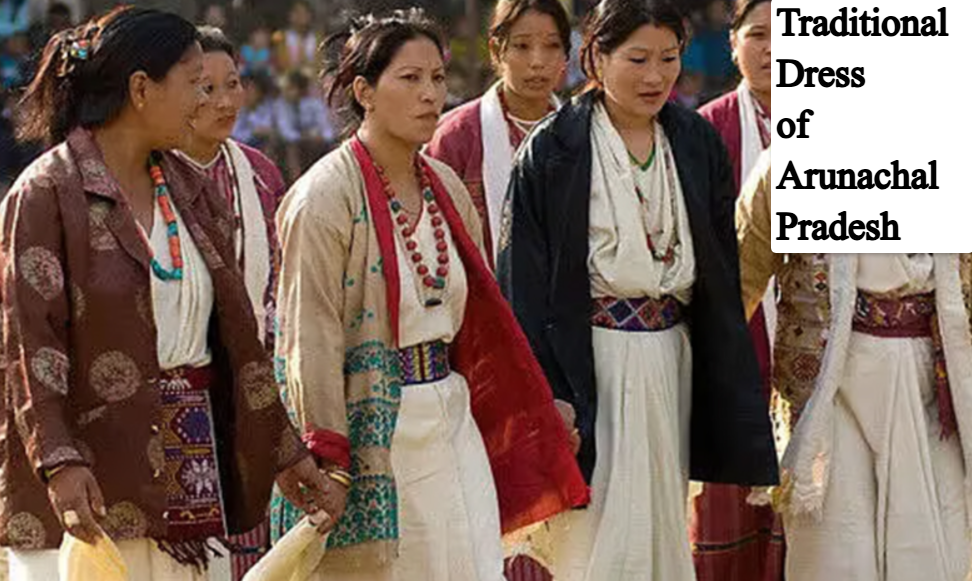
Traditional Dress of Arunachal Pradesh for Men and Women!
Traditional attire is not just attire; it’s a visual representation indicating a personal tribe, social status, and marital status.
Traditional Dress for Men!
Men’s attire balances functional warmth for rugged, outdoor terrains with striking markers of hierarchy and leadership
- Shirts & Loincloths: The basic upper wear is a sleeveless jacket or woven shirt that is made up of either wool or cotton. It is usually available in colors such as dark scarlet red, green, yellow, and black.
- Material as Sign of Prestige: Selection of material often signifies prestige. The Sherdukpan men wear fancy knee-length clothes that are entirely made of silk. On the other hand, the Wanchoo people use colors in their clothes to signify their dominant status.
- Hairstyle & Warrior Decor: The Apatani males also plait their hair into a special forehead knot known as Piiding, which is done with the help of a brass rod (piiding khotu).
Traditional Dress for women!
In the whole state, women’s clothing emphasizes complex woven designs that have been handed down through generations.
- Base and Skirts: Women prefer to dress up in a sleeveless shirt which is made up of cotton or woolen material wrapped tightly around their body. For example, women from the Adi Tribe wear a famous wrap-around skirt named gale.
- Jackets and Shawls: In order to overcome the cold temperatures at higher altitudes, women prefer to wear full-sleeved jackets and cloaks. Idu Mishmi women are famous for making intricate black, red, and blue contrasting geometric grid patterned clothes.
- Tribal Marks: Women in the Sherdukpan tribe wear a particular waist cloth, called mushaik.
- Hair Styling and Modifications: Women in the Apatani tribe wear their hair into a knot on the top of their head, named dilling, which is fixed with a brass stick.
Traditional Jewelry
- Complicated Male Hats: Headgear plays an important role in the fashion world of men. According to their tribe, the men use helmets or caps which are carved out of canes, bamboo, and deerskin or bear skin and decorated with boar tusks and hornbill beak representing their success in hunting.
- Female Headgear: Sherdukpan and Monpa females have a skullcap called gurdam.
- Jewelry: The dresses are complemented by multi-string necklaces that are made up of turquoise and biangsipi (red beads), rings, and hikebi (coin necklaces). There is a special piece of metal jewelry worn by unmarried Adi females known as beyop.
Bottom line
The Arunachal Pradesh people are proud of their wide variety of clothing and heritage. Although the dresses are almost unstitched, they are worn in various styles. Their unstitched dresses make them flexible to wear according to the unpredictable and harsh climate conditions of the mountains.