
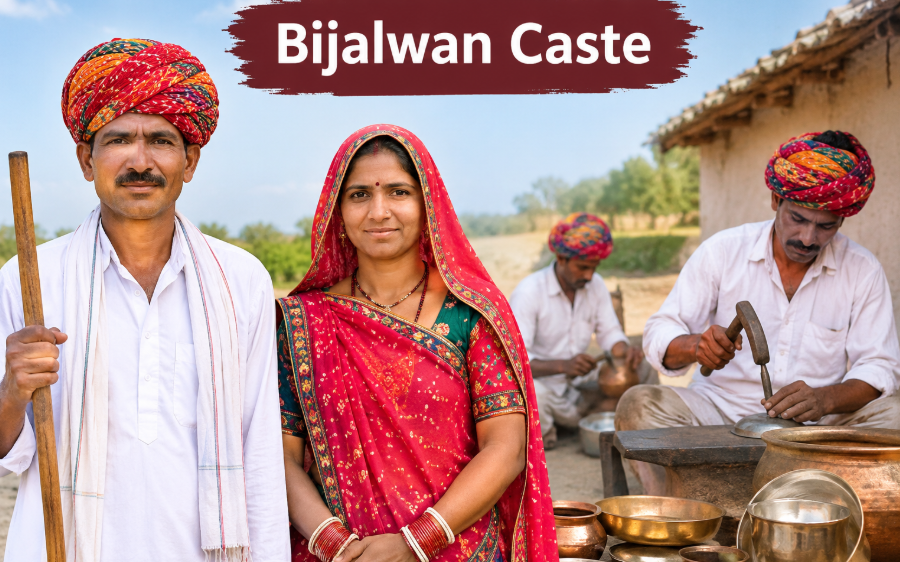
Primarily, Bijalwan Caste is connected with the Himalayan region, particularly Uttarakhand. The community members have played important roles as:
- Priests
- Scholars
- Landowners
The social identity of the Bijalwan family varies according to various factors:
- Their particular district
- Village
- Family lineage
- Local traditions
Their historical background, origin and lineage!
The Bijalwan community is connected with the development of the Uttarakhand hills. The area is home to various communities. Mountain geography plays a significant role in shaping:
- Settlement patterns
- Occupations
- Traditions
- Social relationships
The community’s roots are tied to:
- Garhwal
- Kumoan
Their lineage is traced back to ancient Vedic sages. Their ancestors migrated to the mountains centuries ago. Later, the surname Bijalwan became synonymous with village or local administrative responsibilities.
Bijalwan Name and Surname!
- It can be found among families with roots in the Garhwal Himalayan region.
- Traditional occupation and their social status!
- Historically, the Bijalwans occupied a respected position.
Their traditional occupation and social status!
The Bijalwans occupied a respected position in the traditional social hierarchy. Their primary duties were:
- Performing religious rituals
- Managing temple affairs
- Imparting Vedic education
They were also working as:
Traditional agrarian landowners, which provided economic stability.
Their geographical distribution!
They are particularly present in Uttarakhand districts like:
- Tehri Garhwal
- Uttarkashi
- Dehradun
- Pauri Garhwal
Migration has also expanded the community’s presence.
Now, they have moved to various cities such as:
- Dehradun
- Delhi
- Chandigarh
- Lucknow and other urban centers
Employment and education results in massive migration.
Some members of the community also live outside North India and abroad.
Their cultural traditions and religious practices!
Religion and community rituals are central to their identity. They strictly adhere to Sanatana Dharma. They deeply venerate local hill deities. They worship gods named:
- Shiva
- Vishnu
- Kuldevta worship
Each Bijalwan clan follows an ancestral deity. They hold annual or biennial prayers to seek blessings.
Festivals
They celebrate various Hindu festivals like:
- Diwali
- Makar Sankranti
- Dussehra
Along with all other religious festivals like:
- Harela
- Kauthig
Their traditional occupation!
Agriculture is an important occupation across the Uttarakhand hills. Their families are also engaged in
- Animal husbandry
- Trade
- Government service
- Military service and other occupations
However, today Bijalwan families are involved in
- Education
- Administration
- Business
- Healthcare
- Engineering
- Information technology
- Defence
- Finance and other professions
Their social status and Sarola classification!
The prestige of Sarola Brahmins
The Bijalwan caste occupies an elevated position as an elite Sarola Brahmin group. Originally, the Panwar Kings selected 12 Brahmin clans to serve as:
- The official royal priests
- Astrologers
- Royal chefs
Modern identity and legacy!
The Bijalwan community speaks the Garhwali language along with Hindi. It practices unique hill traditions that blend Hinduism with local animistic worship. They strictly observe clan-based rituals and family lineages. They also celebrate seasonal festivals like:
- Harela
- Egaas
- Makar Sankranti
Their transition into contemporary society!
Now, the community is diversified beyond their traditional priestly duties. They are now working in a diverse range of fields like:
- Governance
- Medicine
- Engineering
- Literature
- Defense
- Academia
Across the country or even outside the country, across the world