
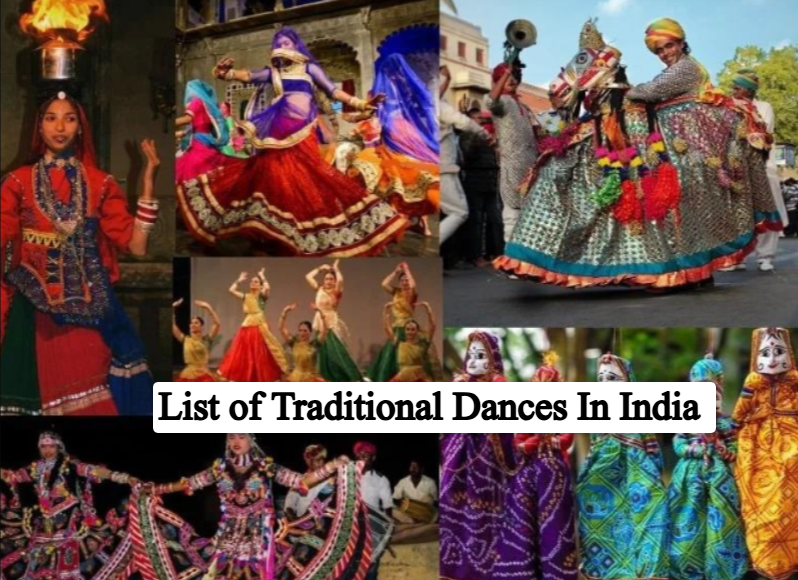
India has a rich culture with lots of folk dances. Each state has bright clothes and old stories that are quite interesting to know. The dance form shows dance life, religious beliefs, and seasonal changes. Indian dance is the most revered identities of its culture.
List of Traditional Dances of India
Exploring the classical dance forms of India!
Different regions have unique dance forms. Each dance form follows strict rules from ancient books like the Natya Shastra. Dances, especially classical dance forms, require specialized training, footwork, and expressions to convey their emotions.
- Bharatanatyam
It is a temple art known for a fixed upper torso and bent legs with dynamic footwork. It expresses Hindu religious themes.
- Kathak (Uttar Pradesh)
It is a storytelling dance practice. It is quite popular for its rapid spins and intricate foot rhythms.
- Kathakali (Kerala)
It is a heavy drama dance. It features facial paint and oversized headgear. Various intense gestures are used in the dance form that demonstrates well versus evil.
- Kuchipudi (Andhra Pradesh)
It is all about fast-paced rhymes with storytelling. Graceful balancing acts on brass plates are performed during the dance practice.
- Manipuri
Soft or fluid movements characterize the dance form. The center stage involves devotional themes that represent the love of Radha and Krishna.
- Mohiniyattam (Kerala)
It is a solo feminine dance form. It comprises gentle and swaying body movements with lyrical storytelling.
- Odissi (Odisha)
The dance form celebrates fluid postures and Tribhanga stances. It echoes ancient temple sculptures.
- Sattriya (Assam)
Saint Srimanta Sankaradeva introduced the specific form of dance. The form of dance is specifically performed as spiritual homage to lord Krishna.
Specific folk and tribal dance forms!
Folk dance forms are not like classical dance forms. They emerge organically from local communities. There are no specific regulations and training present. Some of the tribal dance forms are:
- Bihu (Assam)
It is an energetic and joyous spring dance form performed by the young generation to mark the New Year and harvesting time.
- Giddha or Bhangra (Punjab)
It includes exuberant Punjabi celebrations. High drum beats make the environment joyous.
- Garba and Dandiya Raas (Gujarat)
It is a circular devotional dance performed during the Navratri nights. It lights up the entire mood. It is performed around an earthen lamp traditionally.
- Ghoomar( Rajasthan)
The art form is popular for continuous spins in heavy skirts. The swirling fabric creates bright colors when present under the sun.
- Kalbelia
The dance form is for snake charmer communities in Rajasthan. The style is famous for its flexibility. The black and red costumes sweep the floor in winding paths.
- Hula
It is a Hawaiian dance form that tells stories about nature and gods. During the dance form, dancers use soft hand movements to show wind, trees, and waves.
- Morris Dance
The English street dance uses wooden sticks and handkerchiefs. The dance form is performed by wearing bells on the legs and jumping in line.
Ultimately, all these dance forms are especially performed during festivals. They are a bridge to the past and reflect our identity somewhere. We need to protect these treasures, keeping the families rich.