
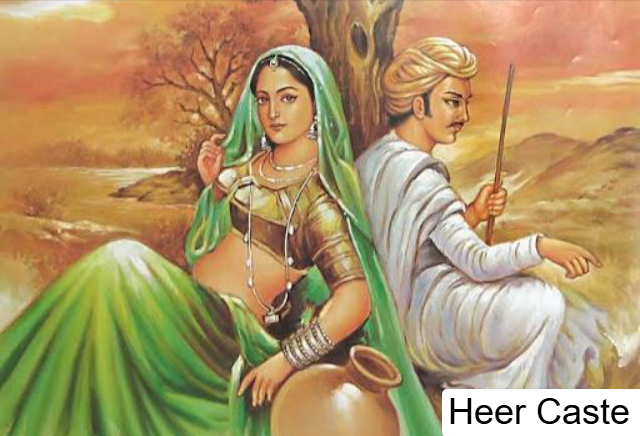
Heer Caste is a clan in the Jat community. The community is present in:
- India
- Pakistan
- Across the global Punjabi diaspora.
Historically, the clan was deeply rooted in agrarian traditions. The community is also connected with other branches of the Heer Caste. Their notable contributions are in:
- Agriculture
- Military service
- Punjabi folklore
Their historical origins and lineages!
The origin of the community is connected with the ancient migrations and tribal structure. Historically, the community is recognised as a clan of the Jat community. In certain regions, their connection to Rajput lineage is noted. They moved across the fertile plains of Punjab centuries ago.
The word “Heer” evolved from a Sanskrit or Prakrit word. It is associated with:
- Cattle rearing
- Warrior group
Their traditional occupation and agrarian roots!
The primary occupation of the caste is agriculture. They played a vital role in developing the agrarian economy. They have expertise in:
- Farming
- Land management
Apart from agriculture, the community members also work in:
- Military
- Law enforcement
They are known for their physical endurance and traditional martial values.
Their geographical distribution!
Today, the Heer population is split across modern borders due to the 1947 partition of British India.
India
Heers are widely found in various districts of India. It is present in:
- Jalandhar
- Hoshiarpur
- Kapurthala
They mostly follow Sikhism.
Pakistan
The community is present in Pakistani Punjab. They are present in various regions like:
- Gujrawala
- Sialkot
- Jhang
Global Diaspora
A significant number of community members have migrated to Western nations such as:
- United Kingdom
- Canada
- The United States
- Australia
Now, they have successfully transitioned into:
- Business
- Politics
- Technology
Their cultural significance and folklore!
The community name ‘Heer’ holds an immense cultural weight. The community is quite famous due to the tragic romantic love story of Heer and Ranjha. In this story, the legendary heroine Heer belonged to the Sial clan of Jhang. The name also represents:
- Beauty
- Fierce independence
- The spirit of Punjab
The Heer caste is also traditionally linked with:
- Punjabi folk music
- Dance like Bhangra
- Community festivals
Know about the modern transition and achievements!
In today’s era, the community has diversified beyond the traditional agrarian roots. With access to higher education and global opportunities, the younger generation is working in a diverse range of fields. They are working as
- Doctors
- Engineers
- Teachers
- Academic administrators
- Entrepreneurs and so on
They are working in various fields and have established a global network.
Their social and cultural structure!
Socially, the community operates within the traditional kinship system. They place a high value on:
- Community solidarity
- Ancestral honor
- Lineage
That is why it is common that they organise social affairs around specific clan identity. They have also maintained close ties with the neighbouring communities.
Marriages within the community follow a strict rule of exogamy. It means individuals would marry outside their specific Gotra but within the Rajput community.
Their legendary connection to folklore!
The caste has a profound connection with Punjabi literature. The word Heer is recognised all across the world.
However, with the broader wave of Punjabi emigration, a lot of families have relocated overseas. They are now living in
- Canada
- The United Kingdom
- The United States
- Australia