
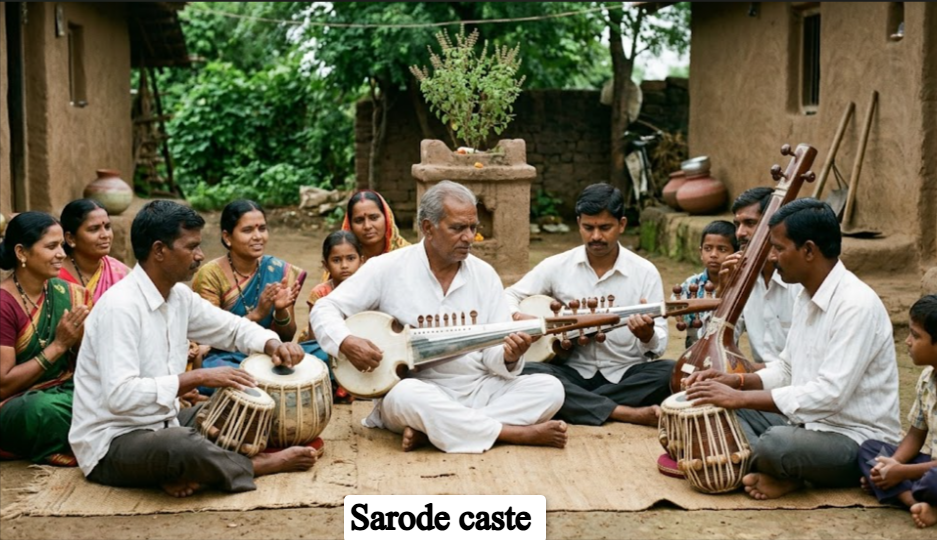
It is phonetically referred to as Saroday, Saroda and Sarodi. Sarode caste a demographic group found in the western state of Maharashtra. It is a smaller pocket across neighbouring regions like:
- Karnataka
- Gujarat
- Parts of Madhya Pradesh
Its historical origin and traditional occupation!
Earlier, the Sarode community was an itinerant community of:
- Bardic genealogists
- Storytellers
- Folk Performers
They travelled from village to village, acting as oral historians.
In modern administrative classification, the Maharashtra government recognises the community under Nomadic Tribes B category. It is a classification designated to protect the affirmative action for wandering groups.
Assessing the historical origins and their cultural roots!
The term Sarode is etymologically tied to socio-religious practices. The Sarodes possess:
- Physical resemblances
- Close Kinship
- Shared family lineages
Historically, they were part of a vast network of migratory communities—travelling from village to village to earn their livelihood.
The name “Sorode” is linked with stringed instruments. They have a specific style of devotional singing and fortune-telling. Today, the community members have adapted to the modern lifestyle. But they have also maintained their
- Internal clan structure
- Traditions
- Customs and Rituals
What is their traditional occupation and art form?
The primary occupation of the Sarode community revolves around:
- Folk Arts
- Entertainment
- Religious Performances
They were popularly known as:
- Professional storytellers
- Balladeers
- Acrobats
Devotional performance: They played or sang songs that are dedicated to local deities using a handmade instrument. They attract crowds with their voice in village squares.
Fortune telling: Many clan members have studied:
- Astrology
- Palmistry
- Traditional forecasting
Their skills make them a familiar figure during festivals and weekly markets.
Genealogy: In certain areas, they have acted as keepers of family lineages.
Their social structure and religious beliefs
The Sarode caste is organised into several exogamous clans. This prevents marriages within the same lineage. They place huge value on community councils. They resolve their disputes internally instead of going to local courts.
Religiously, they are Hindus. They worship regional or folk deities. They worship:
- Goddess Durga
- Yellamma
- Various manifestations of Shiva, such as Khandoba in Maharashtra
They blend Hindu rituals with ancient tribal or animistic traditions.
Their spoken language and communication!
Generally, they are multilingual due to their nomadic history across various states. They speak their dominant regional language, such as:
- Marathi in Maharashtra
- Kannada in Karnataka
They also speak their own regional dialect.
Their internal language often contains a mixed vocabulary that comes from multiple linguistic families. They were allowed to communicate privately when they travelled through public spaces.
Modern challenges and settlement!
With the rise of modern digital entertainment, the demand for traditional folk performance has decreased. Now, a vast Sarodes community have settled permanently in urban slums. They have shifted toward the urban areas for:
- Daily wage labour
- Small-scale vending
- Agriculture
Community identity!
The Sarode caste identity involves several factors. It includes:
- Caste
- Sub-caste
- Region
- Family lineage and community traditions
Different families may share the same surname.
Welfare and current social status!
Indian government has classified the Sarode caste under welfare categories like Nomadic tribes and OBC. This classification is made to provide various facilities to the community.
Now they have access to:
- Educational quotes
- Government jobs
- Housing schemes
Preserving the cultural heritage!
Today, the young generation is achieving their modern aspirations. But the community leaders have documented:
- Their oral histories
- Folk songs
- Traditional arts