
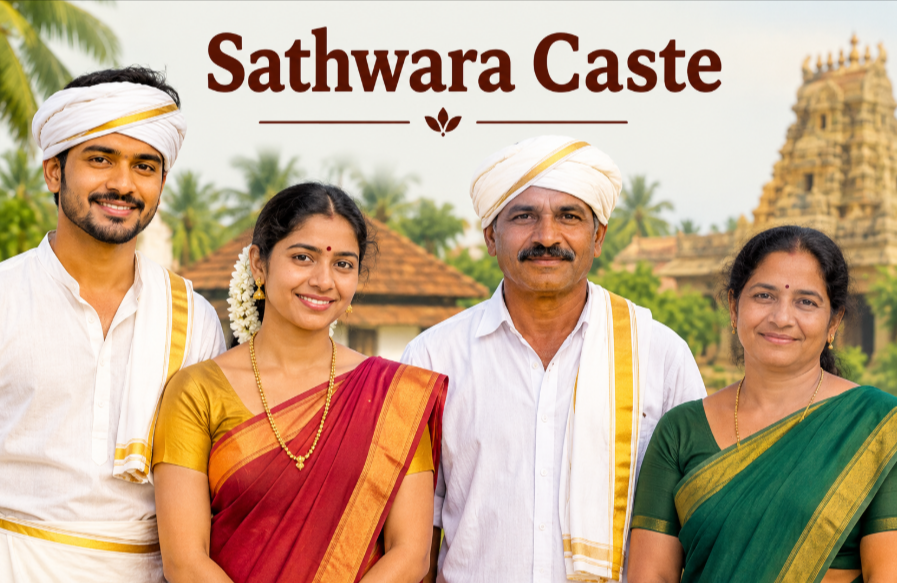
The Sathwara Caste name is commonly spelt Sathwara, Sathvara, and Kadia Sathwara. The spelling varies across various documents. They are mainly found in Gujarat state. They are also present in:
- Rajasthan
- Maharashtra
The community has a connection with:
- Agriculture
- Rural life
- Construction
Initially, they played an important role in the construction sector.
Just like other castes, they have developed:
- Regional history
- Occupation
- Social traditions
Know about the historical origin and identity of the community!
The name Sathwara is derived from the word “Sath,” which means together. It describes the closely knit community structure. Historically, the caste is categorised under OBC. Later, the classification helps in accessing educational and employment reservations. It uplifts the community structure.
Initially, the community lived in regions named:
- Mount Abu
- Adadhar Devi Temple in Rajasthan
Later, they migrated to the south and settled widely across Gujarat. They have established strong roots in:
- Saurashtra
- Kutch
- North Gujarat
Their occupation!
They are historically connected with agriculture for everyday life. Over time, education has created new opportunities for them. Many families expanded into various occupations.
Importance of religion in daily life!
Sathwara Caste Religion plays an important role in their identity. The community is devout Hindus. They worship various deities. They are highly inclined toward:
- Vaishnavism
- Shaivism
They also worship their Kuldevtas and Kuldevis.
They worship their local deities during major life events like:
- Birth
- Marriage
Traditional occupation of Sathwara Caste!
The community is divided into two occupational groups.
- Agriculture
- Farming
The clan is known for their skills in:
- Cultivation of cash crops
- Vegetables
- Grains
Many community members are specialised in:
- Vegetable farming
- Horticulture
Their specific skill set helps them to perform market gardening well. They possess a deep understanding of:
- Soil
- Water management
- Crop patterns
All these are important for the rural economy.
Cultural and religious beliefs!
Religion plays an important role in their life. They practice Hinduism. A huge portion of the cast belongs to the Swaminarayan religious community. This shapes their life practices:
- Daily habits
- Moral values
- Social interactions
Also, they follow principles of vegetarianism. They follow practices like:
- Clean living
- Regular temple worship
- Local deities
- Regional folk Gods
- Ancestral spirits
Additionally, spiritual gatherings and festivals work as the main focal point in bonding the community.
Know about their social structure!
The Sathwara community follows a well-organised system. They maintain a strong sense of internal solidarity. The modern community operates through centralised organisations like Satvara Samaj. The community is working for the welfare of all community members. The organisation is focusing on upgrading:
- Education
- Healthcare
- Social support system
They also use their modern digital platforms to maintain community directories, heritage, and help families arrange marriages. The organisation helps improve the living standards of the community. As a result, the clan members are working in a diverse number of fields.
Modern transition or current status!
The Sathwara community is changing at a fast rate. Traditional farming remains respected. There is increased access to higher education. Many Sathwara youths are entering the professional fields. They are working in
- Engineering
- Medicine
- Software technology
- Business management and so on
Urban migration results in community families living better lives. They are successful in commercial trading and other businesses across the country.
The government has classified the caste under the OBC category in Gujarat. They have successfully transitioned from rural roots to modern urban culture.