
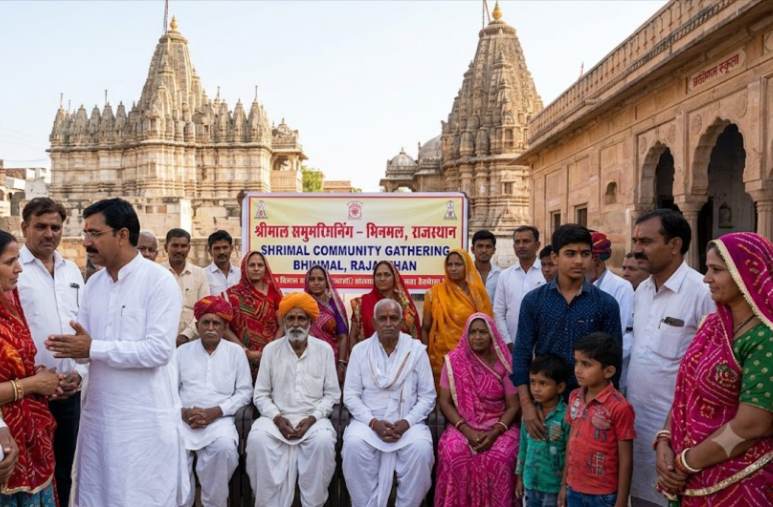
The Shrimal cast is associated with the Bhinmal and Shrimal regions. It is a highly influential social and religious community. They are deeply rooted in culture, traditions, and history. The community derives its name from Shrimal Nagar. It is a village in Bhinmal. The place is located in the Jalore district of Rajasthan.
Naming Etymology!
The name is a combination of words like Shri. It means wealth, prosperity, and Goddess Lakshmi. Therefore, the word translates to the Abode of Prosperity.
The town of Shirmal Nagar worked as a main center of intellect, learning, and trade. The community attracts people from various backgrounds. Over time, the town became the identity of its people.
Historical Background with interesting facts to know!
Different communities lived and worked in this region.
However, some groups later migrated to other parts of the country. It includes:
- Rajasthan
- Gujarat
- Maharashtra
- Madhya Pradesh and various other areas.
Not all the families using the name have the same identity or background. They might differ in various respects.
Cultural and religious divisions!
The caste identity is unique. The caste is divided into two primary branches. These are Shrimali Jains or Shrimali Brahmins. The Jain group accepted the principles of Jainism under spiritual guidance.
Conversely, the Brahmin community maintained traditional roots. They have established 14 different Gotras. Each Gotra honors its own protective goddess, which is known as Kuldevi.
A third subgroup emerged within the community. A few Brahmins shifted their focus to gold. They are specifically called Brahmin Swarnkars.
Historical influence and geographical distribution!
Shrimal families are found in different parts of India. However, their main hub is an important area. Their families also reside in Gujarat and in other western Indian regions. Urban migration has expanded the community’s presence. People have migrated to various cities. These are important destinations for business, education, and other professional opportunities.
Traditional occupation!
Business and commerce have traditionally been important to various communities. Some families are engaged in trading activities. Others have worked in various fields like:
- Finance
- Retail
- Agriculture
- Manufacturing
- Professional services
Over time, occupational patterns have changed. Access to education has opened up various career paths. Young people work in various fields like:
- Technology
- Medicine
- Engineering
- Management
- Banking
- Law
- Education and other professions.
Places such as:
- Mumbai
- Ahmedabad
- Delhi
- Jaipur
- Other commercial centers
They have attracted families looking for new opportunities.
Community and Family Values!
Family plays a significant role in creating social life. They respect their elders. Family gatherings maintain relationships between relatives. Community networks also provide social support. They connect families who are living in various cities. Education and urbanization have influenced relationships. Nuclear families are common in urban areas.
Know about the modern Shrimal community!
The descendants of the caste are present all over. They have maintained a strong presence in Rajasthan, MP, and Gujarat. They can include family gatherings and community events. Food traditions vary according to a family’s background. Families consider background when arranging marriages.
Today’s families emphasize higher education. Young members are working in various fields, such as computer science and engineering. They are known for their strong work ethic. They have become leaders. Besides this, they are also preserving their heritage.