
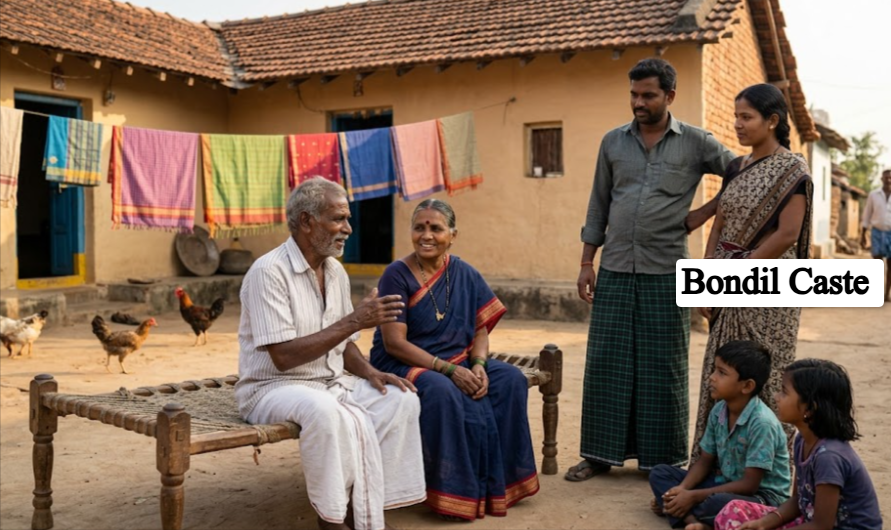
Another name for the Bondil caste is Bondili. They are found in multiple states like:
- Andhra Pradesh
- Telangana
- Tamil Nadu
However, the exact caste classification can vary by region. Their roots trace back to Northern India. They are known as descendants of Bundela Rajputs.
Their identity might be influenced by
- Local traditions
- Language
- Occupation
- Community relationships
Learn about the community’s historical origins of Bondil Caste!
The name Bondili comes from the word Bundelkhand. The region is in central and northern India. A group of Kshatriya warriors migrated from Bundelkhand to the South. Many came as soldiers in the armies of kings and rulers. Some migrated during the Maratha and Mughal empires.
Raja Desingh is an historical figure associated with the community.
Who was Raja Desingh?
Raja Desingh was a Bundela Rajput king. He ruled Gingee in Tamil Nadu. His bravery left a deep cultural impact. Later, these warriors settled down in the southern plains. They blended the northern heritage with the southern customs. This created a unique subculture.
Know about cultural identity and language!
The Bondil community has an interesting linguistic position. Various things show the community’s identity, like:
- Festivals
- Marriage customs
- Family ceremonies
- Food habits
- Social gatherings
Let’s get information on these.
- Language spoken
Their ancestral tongue is related to the Indo-Aryan family. However, they have also adopted the southern state’s culture. That is why many of them speak Telugu. They also settled in Tamil Nadu.
- Culture and customs
Many families have retained distinct cultural habits. They follow Hinduism. They worship traditional Rajput deities. They also celebrate various festivals and follow wedding rituals.
- Marriage alliance
They used to maintain strict endogamy. They marry only within other Bondil and Rajput lineages. It helps them to preserve their identity.
Their Geographical distribution!
The distribution of a surname changes over time. Families have moved from rural areas to cities and towns in search of
- Education
- Employment opportunities
- Better lifestyle
- Business and other opportunities
Urbanization has also contributed to the wider distribution of the caste.
Also, the community’s living has changed due to various factors like:
- Migration
- Agriculture
- Trade
- Local administration
Traditional Occupation!
No single occupation is associated with the community. Their primary occupation was military service.
Different households have worked in various fields like:
- Agriculture
- Guards
- Soldiers
- Trade
- Skilled occupations
- Administration or other professions.
Economic development has further diversified career choices.
Now, individuals from families work in many different sectors.
Socio-economic transition!
Traditionally, they served in the military. But their livelihood changed drastically when traditional kingdoms collapsed. The community had to adapt to the changing economic landscape.
They have transitioned into agricultural land cultivation. Others started working as:
- Small traders
- Business men
- Government sector
Today, a significant proportion is working in:
- Urban professionals
- Private and government services
- Private businesses
Learn about the community’s current status!
Now, the status varies by state and region. They are categorized as backward classes in the following states:
- Andhra Pradesh
- Tamil Nadu
Community members have worked to improve the community’s status. With access to education, their lifestyle and social status have changed.
According to a survey, the community has achieved a good literacy rate. They’re also working in various fields, and the family emphasizes higher education for their children to improve their standard of living.