
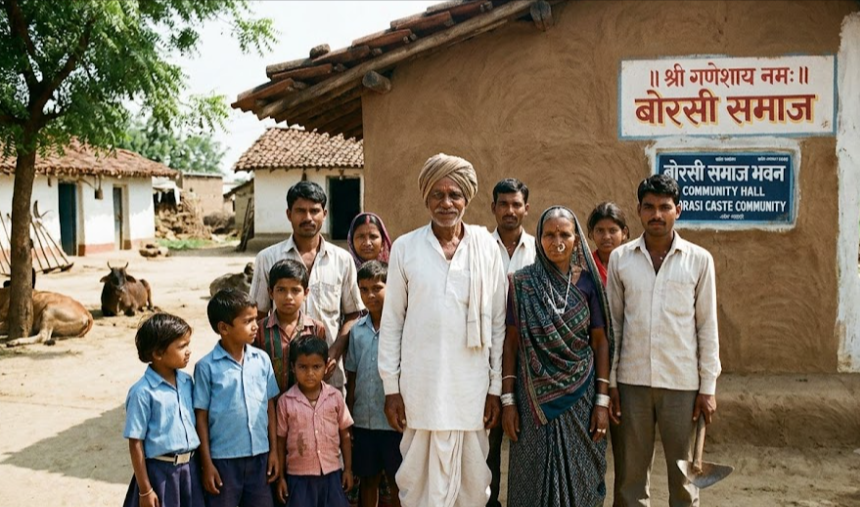
The Borasi caste is mainly found in Chhattisgarh and Madhya Pradesh. The clan has maintained a unique identity. They possess:
- Their unique cultural practices
- Social structures
- Economic traditions
Here, we will discuss the same. Their social classification varies by region. Check out the
- Family lineage
- Local traditions
- Community records
- Regional history
Historical origin and identity!
The historical roots of the Borasi caste are linked to labor and agrarian systems. Elders pass stories, folklore, and genealogical histories to the younger generation. Over time, they established a distinct identity from other communities. Various factors have influenced the community identity, such as:
- Local kingdoms
- Migration
- Occupations
- Villages
- Social relationships
Know about their social structure and kinship!
Their social organization is structured around clans. These clans are called Gotras. Each clan is exogamous. This means members don’t marry within the same clan.
The system helps form marriage alliances. The community structure is traditionally patriarchal. The eldest male is the head. Community members support each other during emergencies and social events.
Learn about their traditional and modern occupation!
Traditionally, the community was engaged in agriculture. Some of them worked as
- Small-scale farmers
- Sharecroppers
- Agricultural laborers
They used to grow regional staples like:
- Rice
- Wheat
- Pulses
- Oilseeds
Some community members also engaged in traditional crafts or local trade. Later, education became a major catalyst that changed the entire equation. Young community members are pursuing higher education. They are entering diverse professional fields like:
- Government services
- Healthcare sector
- Private sector
- Teaching
- Retail business and so on
They have also migrated to other cities as well, like:
- Bhopal
- Indore
- Raipur
It leads to better jobs.
Geographical distribution!
Borasi families now live in various parts of India. Migration spreads the community across different regions. Community members have moved because of
- Employment opportunities
- Trade
- Education
- Marriage alliances
- Better living and working opportunities
- Agriculture
- Other social factors
Now, the clan families live in towns, cities, and rural areas of the country.
Their cultural practices and religious beliefs!
The community follows Hinduism. They actively participate in mainstream Hindu rituals. They worship regional deities like:
- Lord Shiva
- Vishnu
- Durga
They also worship their clan deities named Kuldevtas. They also perform specific customs during marriages, weddings, and other festivals.
They celebrate various major festivals with great enthusiasm, such as:
- Diwali
- Holi
- Dussehra
- Navratri and other community feasts.
They also celebrate festivals that represent their agricultural cycle, like
- Makar Sankrant
- Hareli
They used to sing traditional songs during weddings and festivals.
Today’s Borasi families!
Modern Borasi families participate in various areas of society. Borasi community work in various fields as Like:
- Education
- Business
- Technology
- Healthcare
- Government
- Finance
- Manufacturing and professional services
Education has expanded their career opportunities. Young people increasingly move to larger cities for higher education and employment opportunities.
The path forward!
The Borasi caste is navigating a transition period between tradition and modern advancement. The community is putting efforts to preserve its cultural heritage. They are also embracing modern education and jobs. They require:
- Increased political awareness
- Community mobilization
As education spreads further, the community’s status improves significantly. Precise caste and community classification varies by region. Families are now involved in a range of professions.