
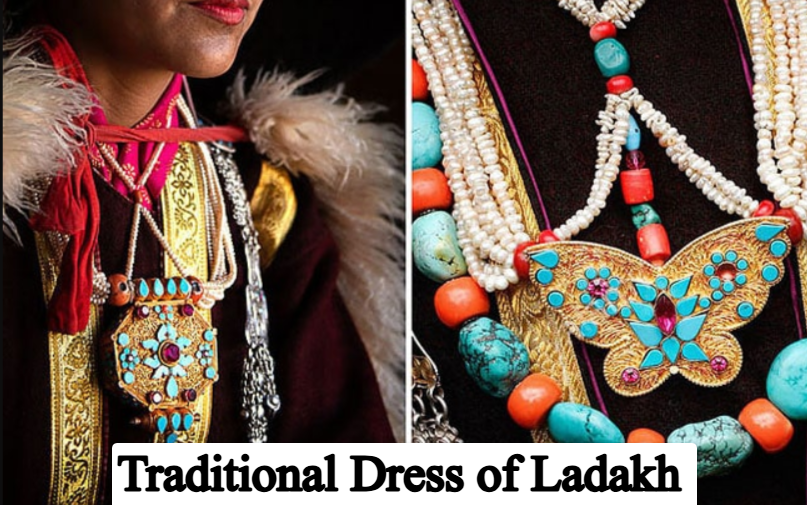
The traditional dress of Ladakh is a perfect blend of comfort, style and survival. These dresses were specifically catered to the harsh weather conditions and high-altitude climate. It features a woollen robe, vibrant capes or turquoise headdresses. The garment reflects the deep cultural heritage and Buddhist spirituality.
Traditional Dress of Ladakh for Men and Women
Goncha: The unisex dress!
The main centre of Ladakhi attire is Goncha. It’s suited for both men and women. It is a voluminous, dense and double-breasted woollen robe which is designed to trap the heat of the body while offering comfort during freezing weather conditions.
- Men’s Goncha
The Goncha is created using thick sheep wool. The Goncha features earthy and monochrome shades of deep maroon, dark brown, and black. Generally, it is paired with a trouser or Salwar and a shirt called Tilen.
- Female’s Goncha
The women’s version is quite popular as Sulma. It flares downwards into gathered pleats from the waist. The flares provide a look of a gown. Generally, the Goncha prepared for women is created using vibrant silk, bright cotton and brocades.
Winter Traditional Dress of Ladakh!
To withstand the harsh winters and biting winds, Ladakhis wore clothes in layers. Only layering of clothes makes it possible for them to sustain in the harsh winter season.
- Yogar and Lokpa
These are the different square and sheepskin capes. These capes are generally worn by women while draped over the shoulders. Generally, the Yogar is embroidered with silk brocade. The Lokpa is quite functional and is created from untreated sheepskin. It provides superior insulation to the wearer during winter days.
- Lawa Goncha
The tribes who are sustaining the remote high-altitude regions, like the Changpa, used to wear the Lawa Goncha. It is an inside-out sheepskin robe that provides maximum insulation and protection against freezing temperatures.
Footwear
Since Ladakhis have to walk on the rocky and snowy terrains, their footwear is also crafted specifically. They wear specialised boots called Pabu. These boots are crafted using woven wool and animal leather. The modern version of these footwear is designed to be waterproof, so your feet can remain warm during winter chores.
Traditional hats and headgear!
Do you know headgear plays an important role in Ladakh’s costumes? It is an important indicator of identity, marital status and social standing.
- Tibi
It is worn by both men and women, featuring upturned ear flaps lined with goat or sheep fur. The capes of men are simple and dark, while women’s capes are colourful with various versions of yellow.
- Ladakhi headdress: Perak
The bridal headdress in Ladakh is a perak that has blue turquoise, coral and other precious stones. Perak sits on top of the bride’s head. It expands outwards from both sides. It flows from the forehead to the lower back. Perak is also considered a status symbol, and it has been passed down from one generation of women to another, like mother to daughter.
- The Brokpa headdress
The tribe Brokpa wears a different headdress, which is decorated with fresh flowers, silver coins and shells.
Conclusion!
The costumes of Ladakh have evolved continuously over a period of time. But the traditional dress of Ladakh is still reserved for wear on monastic festivals, weddings and special occasions. Also, the art of spinning and weaving Pashmina and sheep wool is quite a popular craft. Although the traditional shapes of dresses have evolved, the basics remain the same.