
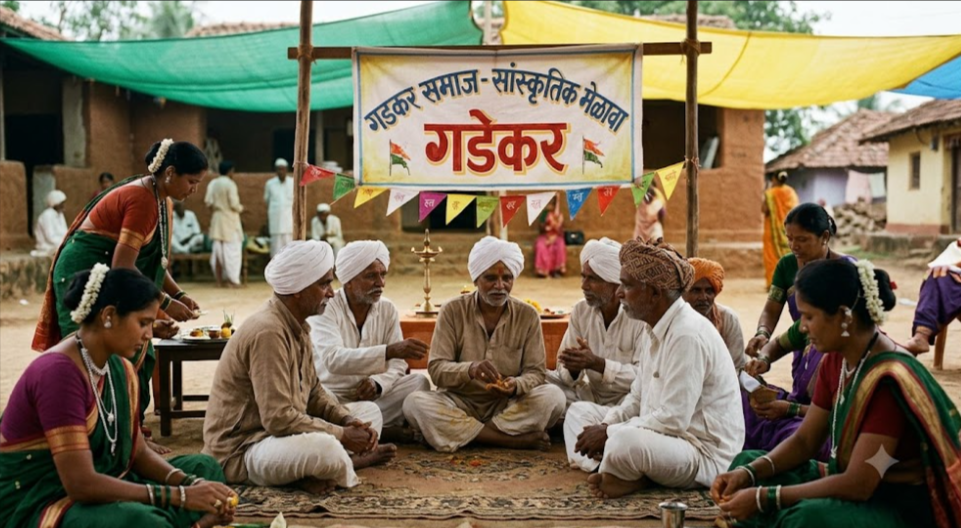
The Gadekar Caste is found commonly in various parts of India. It is mainly located in Maharashtra and nearby areas. Their background depends on
- Their region
- Family traditions
- Community affiliations
Many times, it is counted as a standalone caste. However, historical evidence shows it as a lineage designation or family surname that various communities can use. Therefore, it does not identify a person’s caste. Different families with the same surname may have different identities in terms of:
- Social identity
- Regional identity
- Community background
Its historical significance of Gadekar Caste!
The Gadekar name evolved from the Marathi Language. The surname is formed from a noun combined with the classic Marathi Suffix Kar. It means originating from or belonging to. Therefore, the name carries cultural significance. It denotes individuals who migrated from a specific village or a variant.
Multi-community affiliations!
The surname is not exclusively connected to a single caste. It is shared across various communities.
Maratha community
Many individuals with the name belong to the agricultural or warrior Maratha caste. Anciently, these families were linked to:
- Land cultivation
- Local administration
- Military service under the Maratha Empire
Brahmin sub-castes
The surname is among the Brahmin sub-castes, including Deshastha Brahmins. The group of clan’s ancestors served:
- Village accountants
- Scholars
- Priests
- Jain communities
An important segment of Gadekar is associated with the Digambar Jain community. These families are engaged traditionally in:
- Trade
- Commerce
- Business enterprises
Their geographical distribution!
The Gadekar caste is mainly from Maharashtra. Although people with the surname have migrated to other parts of India due to
- Education
- Employment
- Business opportunities
Their cultural practices and traditions!
The surname spans various religious and social groups. Their cultural practices vary significantly. However, the core thread of these practices is Marathi tradition.
Families celebrate major Maharashtra festivals like:
- Ganesha Chaturthi
- Gudi Padwa
- Diwali
Pilgrimages also play an important role. They visit pilgrimage sites to seek blessings for weddings and births. The main clan deity is Kula daivatas.
The Jain Gadekars are strict vegetarians. They follow various principles like:
- Adherence to nonviolence
- Mahavir Janma Kalyanak celebration
On the other hand, Maratha Gadekars emphasize traditions rooted in agriculture.
Some related surnames are
- Gadekar
- GadeKare
These are basically regional dialect or phonetic differences.
Learn about the modern transition and socio-economic evolution!
Historically, their occupation was mainly agriculture. They used to cultivate staples like:
- Jowar
- Bajra
- Sugarcane
- Rice
Some also managed local trades and administrative tasks. But now, caste-based occupations have been removed. The spread of formal education during the period has triggered a massive shift.
Now, the members of the community have migrated from rural enclaves to urban hubs like
- Mumbai
- Pune
- Nagpur
They also work in various modern sectors. Many of them have turned out to be:
- Engineer
- Doctor
- Corporate manager
- Civil servants
Social changes!
The clan maintains bonds with modern networks. Welfare associations have been made. Communities also organize get-togethers. Other meeting modes are:
- Youth counseling
- Matrimonial meets
The community tries to preserve its unique heritage while embracing progress in the modern world.
Summary!
The clan is a beautiful mosaic of traditions. It shows one name across different castes, occupations, and religions.