
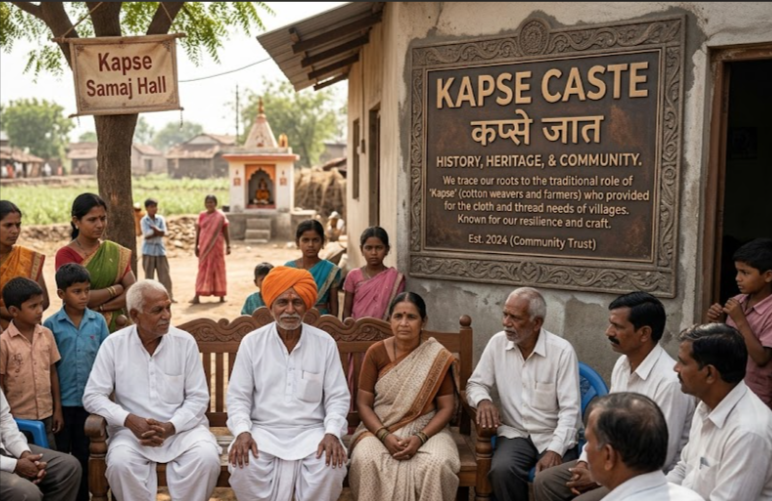
The Kapse is an identity or surname. Kapse Caste community is found in various parts of Maharashtra and other areas. The caste is popular in Marathi-speaking areas. Kapse is not a separate caste. It functions as a highly respected clan lineage.
Kapse families have diverse backgrounds. The community identity has evolved. It has been influenced by various factors like:
- Geography
- Occupation
- Family networks
- Local social structures.
The family line is integrated with broader Maratha and Kunbi social clusters.
Historical Background of Kapse Caste!
Maharashtra has a long social history. The state has hosted diverse communities for generations. Kapse is also listed there. Families with different backgrounds use the surname.
Regional scholars often associate it with cotton production. However, over time, their lifestyle and profession have changed completely.
Geographical Distribution!
A major clan of Kapse families is present in Maharashtra. The community name can be found in different districts. Some families have also moved to major cities. Mumbai and Pune have attracted people. The community has also migrated to
- Nagpur
- Nashik
- Kolhapur and other urban centers
Migration has expanded the presence of many Marathi-speaking families.
Cultural and religious traditions!
The Kapse clan is rooted in Marathi culture. They follow Hindu traditions strictly. Families that belong to a lineage follow specific clan totems, such as Devak. Endogamy is practiced within the community. It preserves the clan’s heritage.
The clan actively participates in Maharashtrian festivals. Various popular festivals that they celebrate are:
- Gudi Padwa
- The Marathi New Year
- The grand ten-day celebration of Ganesh Chaturthi
They also worship lord Vitthal of Pandharpur. Regional deities are also integral in daily lives.
Traditional Livelihoods!
Different families were associated with different livelihoods. Agriculture has also been important in Maharashtra. Farming has supported families for generations. Some families also worked in trade or small business. Some are engaged in local service or government service.
The turn of the 20th century brought rapid urbanization. It entirely transformed the occupational landscape. In rural areas, many remain successful farmers.
The spread of formal education empowered younger generations. Modern economic development has changed the patterns. Now, the community members have established strong footprints in industries like:
- Civil services
- Engineering
- Healthcare
- Corporate sectors
You may have heard the success story of businessmen like Kapse Paithani. He has revolutionized the entire traditional Maharashtra Saree market.
Career development!
Now, the community families are encouraging their children to complete their education. The younger generation is pursuing various courses like:
- Engineering
- Medicine
- Commerce
- Management
- Law
- Teaching
- Information technology.
Professional education has expanded career opportunities. Young people of the clan are working in different parts of India. It has created greater professional diversity.
Marriage Traditions!
Marriage customs can differ between Kapse families. Traditional marriages may involve family participation. Relatives and community networks can play an important role.
Families may consider factors such as:
- Education
- Family background
- Compatibility
- Personal preferences.
However, modern social attitudes are changing marriage practices. Young people are participating in their marriages.
Transformation or modern outlook!
The community faces challenges related to economic volatility. Community welfare associations have been created. These organizations emphasize collective progress, providing access to higher education. This leads to a diverse range of communities for people.