
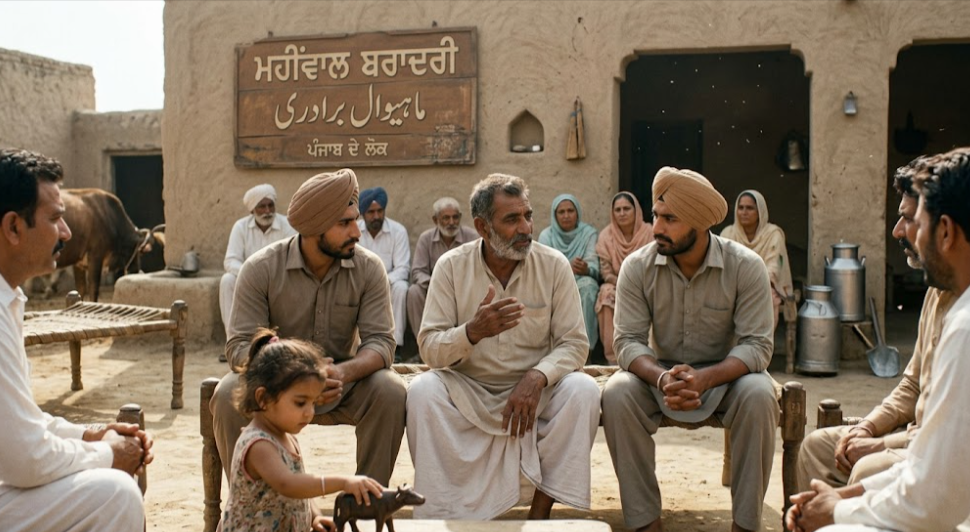
Mahiwal Caste community has regional associations in South Asia. The term Mahiwal is connected with Punjabi and Sindhi Folklore. The community is recognized widely for the legendary love story of Sohni and Mahiwal.
Water-carrying and Buffalo herding was their ancient profession. In Punjabi, the word Mahi means buffalo. Wal means its keeper. However, the Community’s current condition is completely different. We will also talk about the same in this content.
Historical background with occupational roots!
Over time, caste identity is influenced by various factors like:
- Occupation
- Geography
- Family networks
- Local traditions
The group was a semi-nomadic group. Their daily life revolves around livestock like water and buffaloes. They used to provide milk and other dairy products. They are also closely linked to water bodies for their herds. They are also associated with water carriers, who supply water to households. The community was considered essential for the village ecosystem.
Heritage preservation!
It is a smaller community. There are limited written records available. Their histories may be preserved through oral traditions. You can also get information through local documents. However, not every traditional claim can be treated as verified history.
Their cultural significance and folklore!
The name holds a legendary status in Punjabi culture. The main reason is the tragic romance story of Sohni Mahiwal. It is a great Punjabi tragic romance. In this story, a wealthy trader from Bukhara falls in love with Sohni. She was a potter’s daughter from Punjab.
The story is quite famous among generations. It can also be seen in poetry, theatre, music, and popular culture. The story shows various sentiments,
- Love
- Separation
- Courage
Regional Connections!
Traditional occupations are becoming obsolete. Now, the community is working in various fields.
- Muslim Mahiwals
In Punjab and Sindh provinces of Pakistan, Mahiwals practice Islam. They are also economically associated with the water-working communities.
- Hindu and Sikh Mahiwals
The community also follows Hinduism and Sikhism. The community is present in regions such as the Indian Punjab, Jammu, and other northern states. They are associated with community umbrellas such as Rajput, Jhinwar, and Mehra.
Learn about their economic transition and modern status!
With emerging infrastructure and technology, their work has changed. There is a decline in their ancestral occupation. That is why they have started working in various other sectors.
- Agriculture and livestock
Many have transitioned into other sectors for their livelihood. They get engaged in jobs such as dairy farming, cattle rearing, and so on.
- Urban labor
A significant number of people migrated to urban centers. They are working in:
- Small-scale businesses
- Transportation
- Manufacturing and so on
Other public or private sectors!
With access to modern education, the community gets engaged in diverse sectors. They are working in various fields like:
- Civil services
- Teaching
- Private corporate sector
Migration has taken place in search of employment. It helps them in creating professional opportunities. Urban centers provide better access to colleges and workplaces. Therefore, their lives have changed. They have also adopted a modern lifestyle.
Classification!
The community is generally classified as an Other Backward Class or a Scheduled Caste. The classification provides access to government policies and so on.