
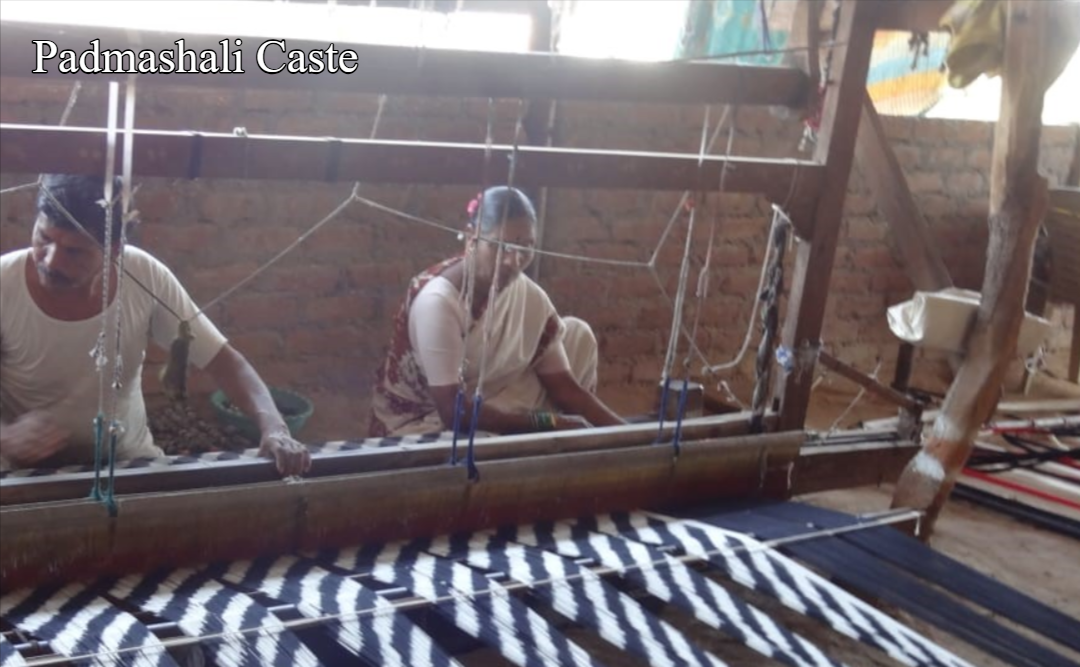
Padmashali Caste a Telugu-speaking community. They primarily live in Andhra Pradesh, Telangana, and Tamil Nadu. Traditionally, they were linked to weaving and textile craftsmanship. They have contributed greatly to a rich textile heritage.
Now, their conditions have changed. They are now associated with various professions. They work in engineering, IT, medicine, and various other fields.
Key Aspects!
- Name meaning: Padma means lotus, and Shali is linked to weaving
- Traditional occupation: Weaving
- Classification: Other Backwards Class and SBC (Different in different regions)
- Lineage: Origin from Bhrigu Maharshi, Markandeya and Bhavana Rishi
- Religious belief: Followers of Shiva (Shaivas) and Vishnu (Vaishnavas).
- The first weaver: Markandeya Maharishi’s son, Bhavana Rishi.
Origin and history about Padmashali Caste!
Initially, Devangas and Padmashalis were a single caste. Later, they split into two based on religion. Over time, their families developed specialised skills apart from weaving.
During the British period, the community faced economic struggles. This was because of the launch of machine-made goods.
Etymology and mythological origins!
Their origin is from Bhavana Rishi. One is considered Ayoni Putra, who emerged from the God’s clothes. The rishi wore a garment made of lotus fibre. Later, the community’s 101 Gotras are believed to have come from his sons.
Know more about the textile heritage!
Different regional textile traditions are present. Various community members participate in various regions. Some of them produce sarees, dhotis, and other dress materials.
Their geographical presence!
The community lives in various regions like:
- Telangana
It houses the largest concentration. Their major hubs lie in Pochampally, Warangal and Karimnagar.
- Andhra Pradesh
Higher populations are in locations like Dharmavaram, Mangalagiri, and other coastal districts.
- Karnataka
Mainly in the state’s cities.
- Maharashtra
Migrated to the textile centres like Ichalkaranji, Solapur, Bhiwandi and Mumbai
Families from the community can also be found in various other regions.
Community organisations they have created!
They have also established various cultural organisations. Some of them are:
- Education initiatives
- Community meetings
- Welfare programs and other celebrations
Assessing the social and religious traditions!
Religious practices vary from family to family.
- The traditions include lord Shiva and other Hindu deities.
- Their costumes and dresses also reflect their religion.
- Their traditions include stories linked to Markandeya.
- Skills and textile knowledge are passed from one generation to another.
- Contributed significantly to the handloom sector. They know spinning, weaving, dyeing, and more.
Current Occupation!
Now, they are equipped for a diverse range of occupations, including:
- Businesses
- Education
- Government services
- Technology
- Medicine
- Engineering
- Finance and other professional fields
Understanding the women’s condition!
Basically, women have contributed to household-based economic activity. They also participate in:
- Education
- Entrepreneurship
- Employment
- Public service and various professional sectors.
Festivals and other celebrations!
Families participate and celebrate various festivals like:
- Diwali
- Dussehra
- Sankranti
- Ugadi and regional celebrations.
Festivals are observed depending on the family’s location.
Various contributions to textiles!
- Pochampally Ikat
They created the world-famous Ikat, known for intricate geometric patterns.
- Dharmavaram silk
They are the master weavers behind this type of silk. These silk sarees are known for zari work and broad borders.
- Modern powerlooms
They have modernised the large-scale textile industry and cloth trading.
- Mangalagiri cotton
They create durable, micro-checked Mangalagiri cotton fabric.
Conclusion
The community’s history is connected to textiles and craftsmanship. Today, the community is involved in various other businesses and occupations. They still carry on their traditions and education.